 admin
adminCDCFIB Shortlisted Candidates Recruitment Cycle 2025/2026
The Civil Defence, Correctional, Fire and Immigration Services Board recruitment exercise for the 2025/2026 cycle represents one of the most competitive federal employment processes in Nigeria. Being shortlisted under CDCFIB is not an offer of employment but an eligibility confirmation that allows a candidate to proceed into a multi-layered assessment framework designed to filter applicants based on competence, integrity, physical fitness, and long-term suitability for paramilitary service.
This guide is written to function as a complete operational manual for shortlisted candidates, prospective applicants, and career advisors. It explains the recruitment logic, assessment stages, CBT structure, physical and medical screening, documentation verification, final selection mechanics, and post-selection outcomes.
Definition of Shortlisting in Federal Paramilitary Recruitment
Shortlisting is an administrative validation stage. It confirms that:
-
The applicant met minimum academic requirements
-
Submitted acceptable credentials
-
Passed initial data screening
-
Did not violate age, qualification, or application rules
It does not:
-
Guarantee employment
-
Bypass further assessments
-
Override physical or medical standards
Shortlisted candidates are still competing for limited slots.
Why Many Shortlisted Candidates Still Fail
Historical recruitment data shows that:
-
Over 40 percent fail CBT benchmarks
-
Approximately 25 percent fail physical screening
-
Another 10 to 15 percent fail medical or document verification
-
A small percentage are removed for disciplinary or integrity issues
Shortlisting is therefore only the entry gate, not the finish line.
CDCFIB Shortlisted Candidates Recruitment Cycle 2025/2026
Structure of the CDCFIB Recruitment Process After Shortlisting
Stage One: Computer-Based Test (CBT)
The CBT is designed to test:
-
Cognitive ability
-
Literacy and numeracy
-
Reasoning under time pressure
-
Civic awareness
-
Service-specific aptitude
The CBT is centrally coordinated and timed.
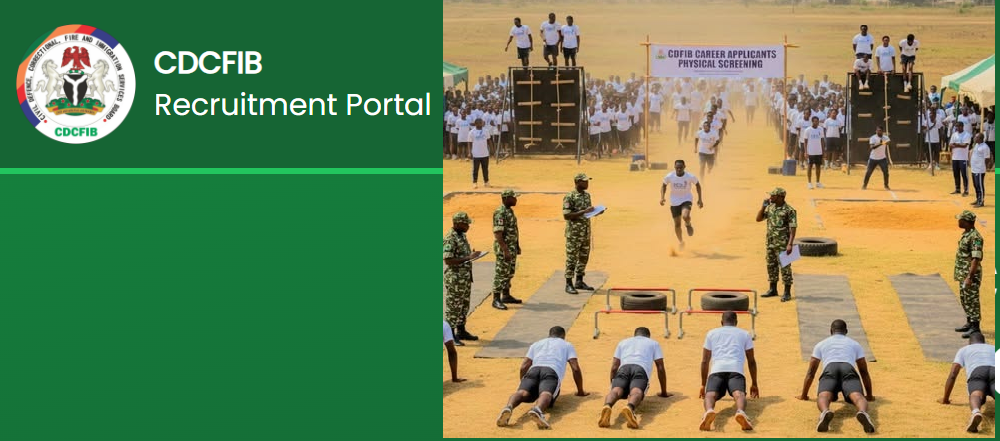
Stage Two: Physical Screening
Candidates who pass CBT are invited for physical screening to verify:
-
Height and body proportion
-
Physical appearance
-
Absence of disqualifying deformities
-
General fitness suitability
Stage Three: Medical Examination
Medical screening confirms:
-
Physical and mental health
-
Vision and hearing adequacy
-
Cardiovascular and respiratory fitness
-
Absence of chronic or disqualifying conditions
Stage Four: Document Verification
This stage validates:
-
Certificates
-
Age records
-
Local government origin
-
Identity consistency
-
Qualification authenticity
Stage Five: Final Selection and Training Invitation
Final selection is based on:
-
Aggregate performance
-
Available vacancies
-
Federal character balance
-
Service-specific manpower needs
Deep Breakdown of the CDCFIB CBT Examination
English Language and Communication Assessment
This section evaluates:
-
Reading comprehension
-
Sentence structure
-
Grammar accuracy
-
Vocabulary usage
-
Instruction interpretation
Why This Matters Operationally
Paramilitary officers must:
-
Understand written orders
-
Draft reports
-
Interpret operational guidelines
-
Communicate clearly during emergencies
Quantitative Aptitude and Numerical Reasoning
This includes:
-
Basic arithmetic
-
Percentages
-
Ratios
-
Time and distance
-
Logical numerical problems
Operational Relevance
Numerical reasoning is essential for:
-
Resource allocation
-
Incident estimation
-
Time-based response planning
-
Equipment and manpower calculations
Logical Reasoning and Pattern Analysis
This section tests:
-
Pattern recognition
-
Deductive reasoning
-
Decision-making speed
Operational Application
Security and emergency response require:
-
Rapid judgment
-
Risk assessment
-
Pattern detection in threat scenarios
General Studies and Civic Knowledge
Topics often include:
-
Nigerian constitution basics
-
National symbols
-
Government structure
-
Current affairs
-
National security awareness
Why Civic Knowledge Is Tested
Officers represent the state and must:
-
Understand governance frameworks
-
Respect constitutional authority
-
Operate within legal boundaries
CDCFIB Shortlisted Candidates Recruitment Cycle 2025/2026
Service-Specific Aptitude Segments
Depending on service selection:
-
Immigration applicants may see border control logic
-
Fire Service applicants may face emergency response scenarios
-
Correctional Service applicants may face ethics and rehabilitation questions
-
Civil Defence applicants may face infrastructure protection logic
CBT Performance Strategy for Shortlisted Candidates
Time Management Techniques
Candidates should:
-
Answer easy questions first
-
Avoid spending excessive time on one question
-
Maintain steady pacing
-
Review flagged questions if time permits
Common CBT Mistakes That Cause Failure
-
Guessing without logic
-
Panicking under time pressure
-
Ignoring instructions
-
Poor reading comprehension
-
Overconfidence in weak areas
Physical Screening Standards and Evaluation Logic
Height and Body Proportion Requirements
While exact figures vary by service:
-
Minimum height standards are strictly enforced
-
Body proportion must align with height
-
Excessive underweight or obesity can disqualify
Visual and Physical Appearance Checks
Candidates are assessed for:
-
Clear vision
-
Proper posture
-
Absence of visible deformities
-
General physical alertness
Case Study: CBT Success but Physical Screening Failure
A male candidate scored among the top 10 percent in CBT but failed physical screening due to height deficiency. Despite academic excellence, the candidate was disqualified without appeal. This illustrates that physical standards are absolute.
Medical Examination and Health Clearance Explained
Scope of Medical Tests
Medical screening may include:
-
Blood pressure checks
-
Vision and hearing tests
-
Chest and respiratory evaluation
-
General physical examination
Disqualifying Medical Conditions
Common disqualifiers include:
-
Severe visual impairment
-
Uncontrolled hypertension
-
Chronic respiratory conditions
-
Physical disabilities incompatible with service duties
Case Study: Medical Disclosure Versus Concealment
One candidate disclosed a minor, well-managed condition and was cleared after further assessment. Another concealed a condition that was later discovered, leading to permanent disqualification. Transparency is critical.
Documentation Verification and Integrity Screening
Documents Commonly Verified
-
Educational certificates
-
Birth records or age declarations
-
Local government identification
-
Name consistency across records
Common Documentation Errors
-
Name spelling discrepancies
-
Conflicting dates of birth
-
Unaccredited institutions
-
Forged or altered certificates
Case Study: Disqualification Due to Name Inconsistency
A candidate used different name formats across certificates. Despite strong CBT and physical performance, the inconsistency led to disqualification. Document alignment is non-negotiable.
Final Selection Mechanics and Merit Ranking
How Final Lists Are Compiled
Final selection considers:
-
CBT score ranking
-
Physical and medical clearance
-
Document verification
-
Service manpower needs
-
Federal character balance
Why High CBT Scores Alone Are Not Enough
Candidates with moderate CBT scores but perfect physical, medical, and document records often outperform higher scorers with deficiencies.
Training Phase: What Successful Candidates Should Expect
Nature of CDCFIB Training Institutions
Training is:
-
Regimented
-
Physically demanding
-
Discipline-focused
-
Ethically structured
Behavioral Expectations During Training
Recruits must demonstrate:
-
Obedience
-
Teamwork
-
Emotional control
-
Respect for hierarchy
Case Study: Training Discharge Due to Indiscipline
A recruit who passed all stages was discharged during training for repeated insubordination. Recruitment success does not guarantee retention.
Career Structure and Long-Term Benefits of CDCFIB Employment
Entry-Level Career Placement
Placement depends on:
-
Qualification level
-
Service needs
-
Training performance
Promotion and Advancement Opportunities
Career growth includes:
-
Rank promotions
-
Specialized training
-
Leadership roles
-
Inter-agency assignments
CDCFIB Shortlisted Candidates Recruitment Cycle 2025/2026
Welfare and Job Security
Benefits include:
-
Stable income
-
Pension schemes
-
Housing and welfare support
-
National service recognition
Common Myths About CDCFIB Recruitment
Myth: External Influence Guarantees Success
Recruitment is centrally monitored. Attempts at influence often result in disqualification.
Myth: Recruitment Is Only Academic
Physical, medical, ethical, and behavioral standards are equally important.
Myth: Shortlisting Equals Employment
Shortlisting only grants access to further evaluation.
Strategic Preparation Guide for Future Applicants
Academic Preparation
-
Strengthen literacy and numeracy
-
Practice CBT simulations
-
Improve civic awareness
Physical Preparation
-
Maintain fitness early
-
Monitor weight and posture
-
Address health issues proactively
Documentation Preparation
-
Align names across documents
-
Verify certificate authenticity
-
Secure accurate age records
Comprehensive Case Scenario: From Application to Deployment
A candidate applied with correct documentation, prepared holistically for CBT, maintained physical fitness, passed medical screening, completed training successfully, and was deployed to a regional command. Within five years, the candidate advanced through ranks due to discipline and performance.
Professional Advisory Summary for 2025/2026 CDCFIB Candidates
The CDCFIB recruitment process is not a single examination but a comprehensive suitability assessment. Success requires:
-
Intellectual readiness
-
Physical fitness
-
Medical soundness
-
Ethical integrity
-
Long-term discipline
Candidates who prepare holistically significantly improve their chances of success.
Final Expert Guidance
Shortlisted candidates must treat every stage as decisive. Preparation should be deliberate, honest, and comprehensive. CDCFIB recruitment is designed to select individuals capable of representing the Nigerian state with competence, discipline, and integrity.

 admin
admin