 admin
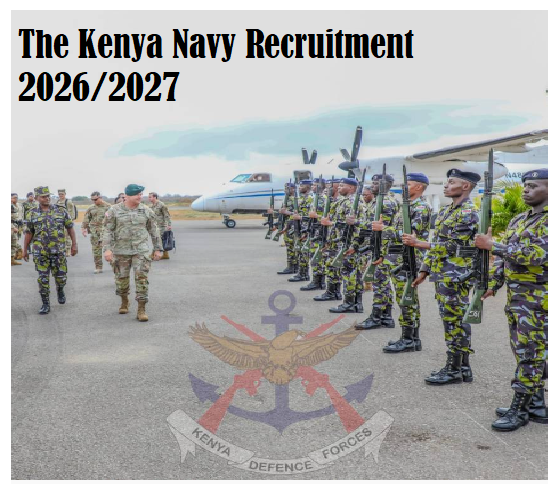
adminThe Kenya Navy Recruitment 2026/2027
The Kenya Navy is a critical arm of the Kenya Defence Forces, responsible for safeguarding Kenya’s maritime interests, territorial waters, ports, and coastal economic assets. In an era where maritime security has become central to national development, trade protection, offshore resources, and counter-terrorism operations, the role of the Kenya Navy has expanded far beyond traditional sea patrols.
For the 2026/2027 recruitment cycle, interest in the Kenya Navy is expected to increase significantly, especially among young Africans, students, graduates, and job seekers seeking stable government employment, professional military careers, and long-term security. Unlike casual job opportunities, joining the Kenya Navy represents a lifetime profession built on discipline, skill acquisition, national service, and structured career growth.
This article is written as a comprehensive professional guide, designed to explain the Kenya Navy recruitment process in clear, detailed, and realistic terms. It addresses not only eligibility and application procedures, but also training, career paths, responsibilities, expectations, and long-term outcomes. The aim is to help prospective applicants understand what the Kenya Navy truly demands and what it genuinely offers. To Apply visit: https://www.mod.go.ke/kenya-navy/
Overview of the Kenya Navy as a Military Institution
Historical Background and Core Mandate
The Kenya Navy was established to protect Kenya’s maritime borders and has since evolved into a modern naval force capable of conducting:
-
maritime surveillance
-
coastal defense operations
-
anti-piracy missions
-
counter-smuggling activities
-
search and rescue operations
-
regional and international peace support missions
Operating primarily from bases along Kenya’s coastline, the Navy works closely with other branches of the Kenya Defence Forces and regional security partners.
The Role of the Kenya Navy in National Development
Beyond defense, the Kenya Navy contributes to:
-
securing maritime trade routes
-
protecting fishing and offshore resources
-
safeguarding ports and shipping infrastructure
-
supporting disaster response operations
These roles make naval service both a security responsibility and an economic safeguard for the nation.
Categories of Kenya Navy Recruitment 2026/2027
General Service Recruits
This category is open to candidates with basic academic qualifications who wish to serve as sailors in operational and support roles. General service recruits form the backbone of naval operations.
Tradesmen and Women
Applicants with technical skills such as:
-
marine engineering
-
mechanical maintenance
-
electrical systems
-
communications
-
logistics and supply
are recruited to support naval vessels and shore installations.
Cadet Officers
Cadet officer recruitment targets candidates with higher academic qualifications who will undergo officer training and eventually assume leadership and command responsibilities.
Specialist Officers
Professionals such as:
-
medical practitioners
-
engineers
-
information technology specialists
-
legal officers
may be recruited directly into officer ranks depending on qualifications and experience.
Eligibility Requirements for Kenya Navy Recruitment 2026/2027
Nationality and Citizenship
Applicants must be:
-
Kenyan citizens
-
in possession of valid national identification documents
Age Requirements
Age limits vary by category:
-
general recruits typically fall within a defined youth age bracket
-
officer cadets and specialists may have slightly higher age limits
Meeting age criteria is strictly enforced.
Educational Qualifications
Minimum academic requirements include:
-
secondary school education for general recruits
-
post-secondary or university qualifications for officer and specialist roles
Academic results must meet prescribed standards.
Physical and Medical Fitness
Applicants must demonstrate:
-
physical strength and endurance
-
good eyesight and hearing
-
overall medical fitness
Naval service is physically demanding, especially in maritime environments.
Character and Discipline Standards
Candidates must:
-
have no criminal record
-
demonstrate moral integrity
-
show willingness to adhere to military discipline
Background checks are conducted during selection.
Step-by-Step Kenya Navy Recruitment Process
Step 1: Recruitment Announcement
Recruitment is officially announced through recognized government channels. Applicants are expected to rely on verified information and avoid unofficial intermediaries.
Step 2: Document Preparation
Applicants are required to present:
-
academic certificates
-
identification documents
-
birth records
-
passport photographs
Original documents are typically required during screening.
Step 3: Physical Screening and Verification
This stage includes:
-
height and weight checks
-
document verification
-
initial medical assessment
Candidates who fail at this stage are disqualified.
Step 4: Aptitude and Medical Tests
Further assessments may involve:
-
written aptitude evaluations
-
detailed medical examinations
-
endurance tests
These tests determine suitability for naval training.
Step 5: Final Selection and Enlistment
Successful candidates receive:
-
enlistment confirmation
-
reporting instructions
-
training schedules
This marks the official entry into naval service.
Training Structure in the Kenya Navy
Basic Military Training
All recruits undergo:
-
physical conditioning
-
discipline drills
-
weapons handling
-
naval ethics and values
This phase transforms civilians into disciplined service members.
Naval-Specific Training
Specialized training includes:
-
seamanship
-
navigation fundamentals
-
shipboard operations
-
maritime safety procedures
This training prepares recruits for life at sea.
Advanced and Trade Training
Depending on assignment, recruits may receive:
-
technical training
-
engineering instruction
-
communications and systems education
Training continues throughout one’s naval career.
Core Duties and Responsibilities of Kenya Navy Personnel
Maritime Patrol and Surveillance
Personnel conduct:
-
sea patrols
-
coastal monitoring
-
intelligence gathering
These duties ensure territorial security.
Ship Operations and Maintenance
Naval personnel are responsible for:
-
operating vessels
-
maintaining equipment
-
ensuring operational readiness
Security and Defense Operations
This includes:
-
counter-piracy missions
-
protection of maritime assets
-
regional security collaboration
Humanitarian and Disaster Response
The Navy supports:
-
rescue missions
-
disaster relief operations
-
emergency evacuations
Professional Expectations and Naval Culture
Discipline and Command Structure
Naval life is governed by:
-
strict hierarchy
-
obedience to lawful orders
-
professional conduct
Teamwork and Responsibility
Life at sea requires:
-
mutual trust
-
cooperation
-
accountability
Adaptability to Sea Life
Personnel must adapt to:
-
long deployments
-
confined shipboard environments
-
unpredictable sea conditions
Career Opportunities Within the Kenya Navy
Long-Term Career Development
Naval service offers:
-
structured promotion paths
-
continuous training
-
leadership development
Technical and Professional Growth
Personnel gain skills transferable to:
-
maritime industries
-
engineering sectors
-
logistics and security services
Post-Service Opportunities
Retired naval personnel often transition into:
-
port operations
-
maritime security
-
engineering and technical fields
Professional Guidance for Prospective Applicants
Applicants are advised to:
-
prepare physically and mentally
-
verify all information through official sources
-
avoid recruitment fraud
-
understand the long-term commitment required
Joining the Kenya Navy is not merely a job decision but a career and lifestyle choice.

 admin
admin